Megalodon was the biggest shark that ever existed. It was larger than the average city bus and could bite down with a force between 10.8 and 18.2 tons - enough to crush a prehistoric whale's skull as easily as a grape.
Megalodon: The Bus-Sized Shark With a Bone-Crushing Bite
Imagine a shark so massive it could swallow a great white whole. Now imagine that same shark clamping down on prey with enough force to crush a car. That was Megalodon, the undisputed heavyweight champion of shark evolution.
This prehistoric predator ruled the oceans from roughly 23 to 3.6 million years ago. At up to 60 feet long, it dwarfed today's largest sharks and made a city bus look like a compact car.
A Bite That Defied Physics
Scientists have calculated Megalodon's bite force at somewhere between 10.8 and 18.2 tons. For context, a great white shark bites with about 2 tons of force. A saltwater crocodile manages around 3.7 tons. Megalodon's jaws operated in an entirely different league.
That kind of power wasn't overkill—it was necessary. Megalodon's menu included:
- Prehistoric whales (its primary food source)
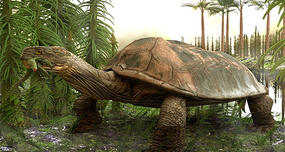
- Giant sea turtles with armored shells
- Other large sharks
- Dolphins and seals
When you're hunting whales with skulls several feet thick, you need a bite that treats bone like breadsticks.
Built for Destruction
Megalodon teeth tell the story of a purpose-built killing machine. Each tooth measured up to 7 inches long—roughly the size of a human hand. They were serrated like steak knives and arranged in rows, with new teeth constantly replacing worn ones.
The jaw itself spanned an estimated 9 to 11 feet wide. A grown adult could stand inside it without ducking. Multiple adults, actually.
But teeth and jaws don't tell the whole story. Megalodon's hunting strategy was brutally efficient. Fossil evidence suggests it targeted the fins, tails, and flippers of whales first—crippling its prey's ability to escape before moving in for the kill.
Why It Disappeared
A predator this dominant seems unstoppable. So what killed Megalodon?
The answer involves cosmic bad luck and changing menus. Around 3.6 million years ago, ocean temperatures dropped significantly. Megalodon, adapted to warm tropical waters, found its habitat shrinking. Meanwhile, its prey—large baleen whales—migrated to colder polar waters where Megalodon couldn't follow.
Competition didn't help either. Orcas evolved into efficient pack hunters, likely competing for the same food sources. For an apex predator requiring enormous amounts of food daily, a shrinking buffet meant starvation.
The Legend Lives On
Megalodon teeth wash up on beaches worldwide, dark and fossilized after millions of years. They're so large that ancient people believed they were dragon tongues or the petrified tips of giant serpents.
Today, these teeth serve as reminders that the ocean once harbored something far more terrifying than anything swimming today. Every great white shark patrolling modern waters is essentially a miniature echo of its colossal ancestor—a reminder that nature once built sharks on a truly monstrous scale.
Frequently Asked Questions
How big was Megalodon compared to a great white shark?
How strong was Megalodon's bite?
What did Megalodon eat?
When did Megalodon go extinct?
Could Megalodon still exist today?
Related Topics
More from Animals