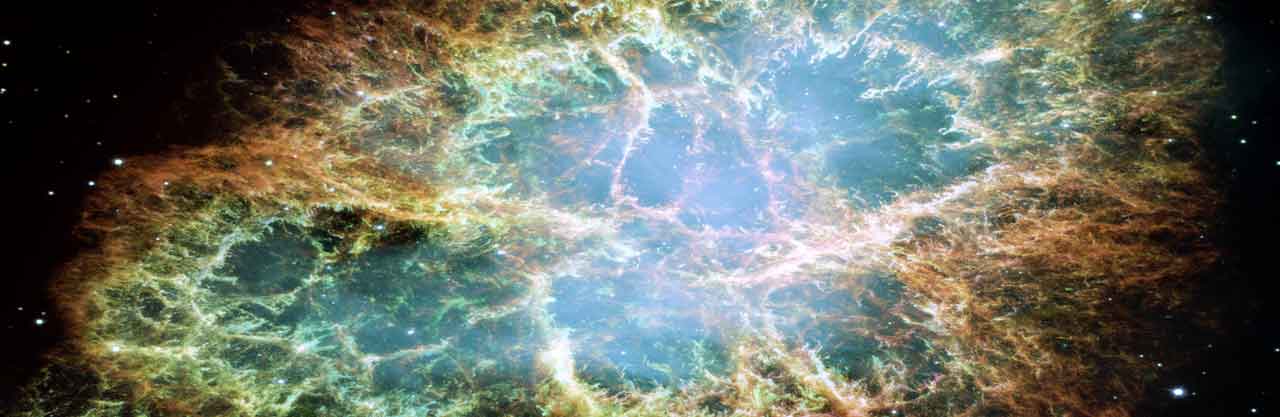
In the year 1054 AD, there was an explosion in the sky so bright that it was visible for 23 days straight, even during the day.
The Supernova So Bright It Lit Up the Sky for 23 Days
Imagine looking up at the daytime sky and seeing a star shining bright enough to compete with the sun. That's exactly what happened in the summer of 1054 AD, when astronomers across Asia witnessed one of the most spectacular cosmic events in recorded history.
On July 4, 1054, a massive star about 6,500 light-years away reached the end of its life and exploded in what we now call a supernova. The explosion was so intense that it briefly outshone every other star in the night sky, and for 23 consecutive days, it was visible even in broad daylight.
Ancient Astronomers Couldn't Believe Their Eyes
Chinese astronomers were meticulous record-keepers, and they documented this "guest star" extensively. They noted its position near the constellation we know as Taurus and tracked its brightness for months. Japanese and Arabic astronomers also recorded the phenomenon, calling it a temporary star that appeared where none had existed before.
The daytime visibility lasted nearly a month, but the show wasn't over. At night, the supernova remained visible to the naked eye for an astonishing 653 days—almost two full years. For the first several weeks, it was brighter than Venus, the brightest planet in our sky.
What We See Today
When you point a telescope at the spot where medieval astronomers saw their "guest star," you'll find the Crab Nebula—a spectacular cloud of gas and dust still expanding outward from that ancient explosion. At its center sits a pulsar, a rapidly spinning neutron star that's all that remains of the original star's core.
The Crab Nebula is one of the most studied objects in astronomy. It's expanding at roughly 1,500 kilometers per second, and it's currently about 11 light-years across. Think about that: we're watching the aftermath of an explosion that medieval scholars witnessed with their naked eyes.
Why Wasn't Everyone Talking About It?
Here's the puzzling part: European records from 1054 are strangely silent about this cosmic spectacle. We have detailed accounts from China, Japan, and the Arab world, but barely a whisper from Europe.
Historians debate why. Some suggest it appeared during daylight hours when European scholars weren't watching the skies. Others point to the chaotic political climate of medieval Europe, where astronomical record-keeping wasn't as systematized as in Asia. A few records may have been lost to time, or perhaps cloudy weather obscured the view at critical moments.
Whatever the reason, we're fortunate that astronomers elsewhere documented it so thoroughly. Their observations helped modern scientists identify the Crab Nebula as a supernova remnant and understand stellar evolution in ways that wouldn't have been possible otherwise.
The next time you see a shooting star and think it's impressive, remember: your ancestors once watched a star explode with such fury that it turned night into day for nearly a month. Now that's a light show.